During August and September 2026, PanNature worked with local authorities,…
From Mountain Forests to Coastal Shores: A Season of Restoration
Between July and September 2026, PanNature’s restoration work stretched from the limestone mountains of Son La and Phu Tho to the coast of Ninh Binh. The landscapes were very different, but the purpose was shared: to help damaged ecosystems recover, strengthen biodiversity, and support communities in caring for the places where they live.
In the mountains, restoration meant returning native trees to degraded forest. Along the coast, it meant rebuilding a protective green belt and improving the local environment. Across all sites, the work depended on cooperation among local communities, authorities, businesses, and conservation partners.
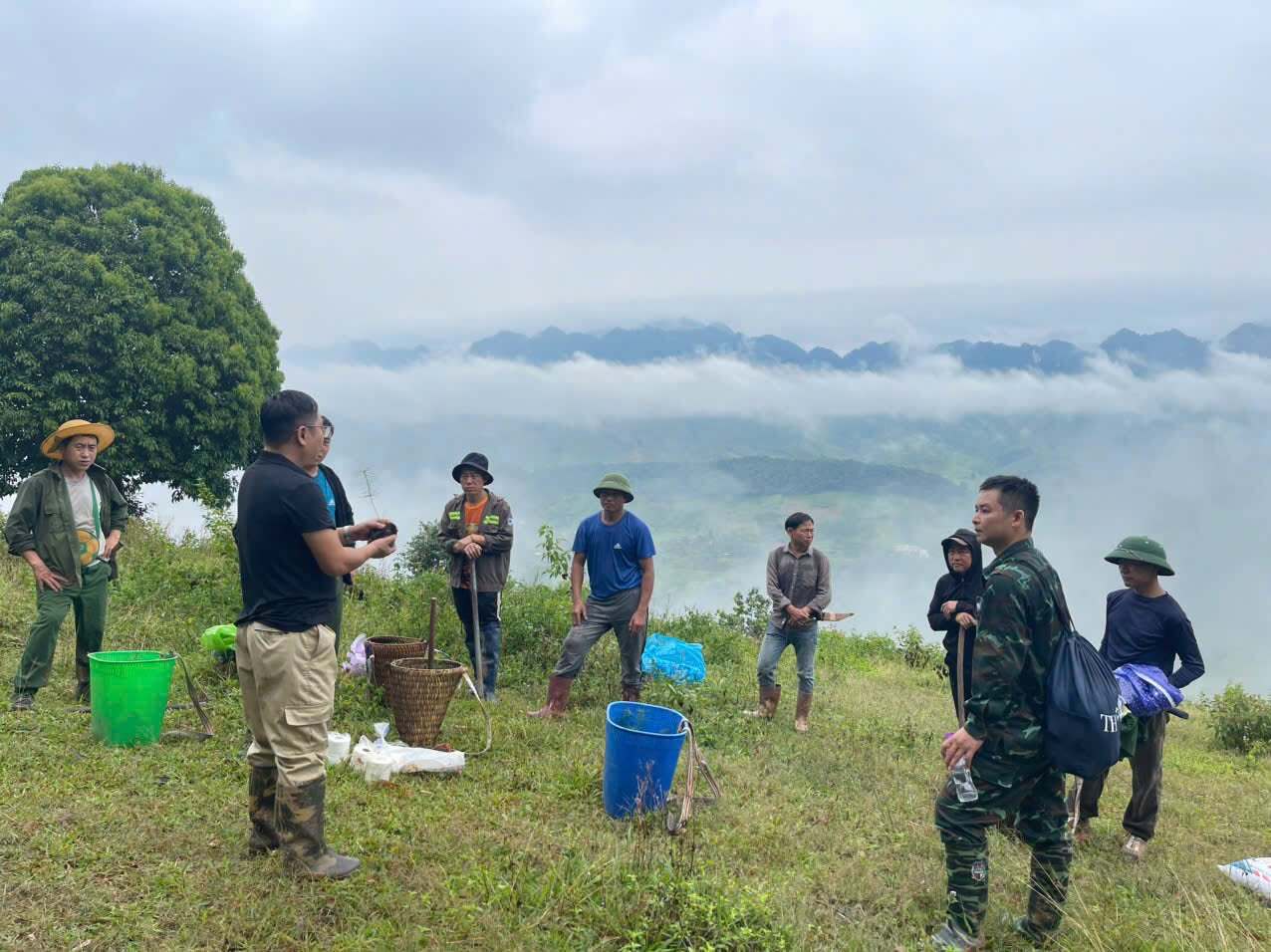
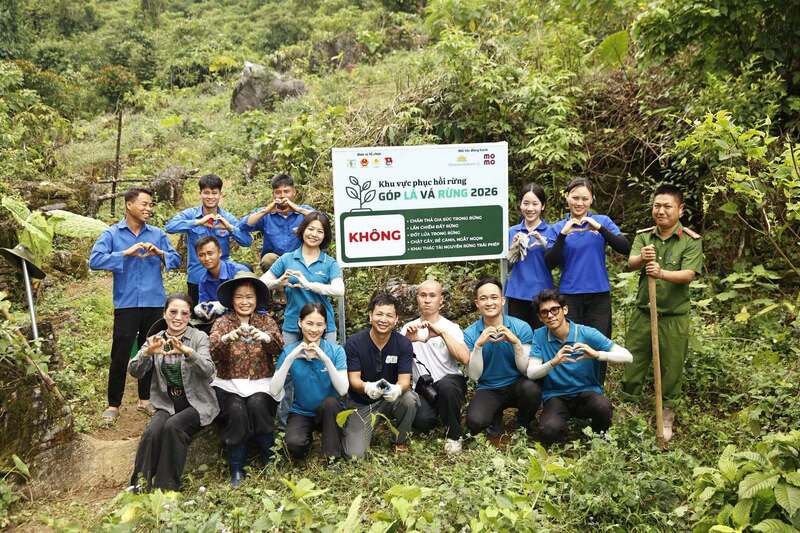
The season began on 24 July in Pa Cop Village, Van Ho Commune, Son La Province, where PanNature worked with Vietnam Airlines and MoMo under the Leaves for Forests 2026 campaign. The programme aims to restore 72 hectares of degraded forest across Van Ho and Chieng Son communes in Son La Province and Pa Co Commune in Phu Tho Province, with approximately 43,400 native trees.
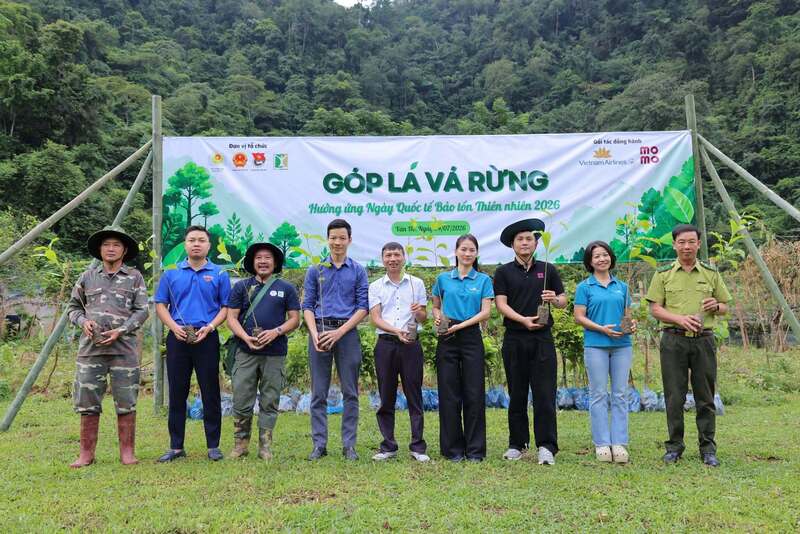
Planting in Van Ho is not easy work. Restoration sites are scattered across steep slopes, and reaching them often means travelling along narrow and rocky mountain roads before carrying seedlings by hand into the forest. Yet these are precisely the places where restoration matters most. The remaining forests provide habitat for rare and threatened wildlife, and degraded patches can weaken the ecological connections between larger forest areas.
A week later, on 31 July, restoration took a different form. In Lung Xa, Ta De, and Pa Cop villages, PanNature worked with the Thiennguyen platform and local residents to plant 500 mountain ebony trees (Bauhinia variegata) along village roads. Here, the objective was not to recreate natural forest, but to increase local tree cover and create greener village landscapes.
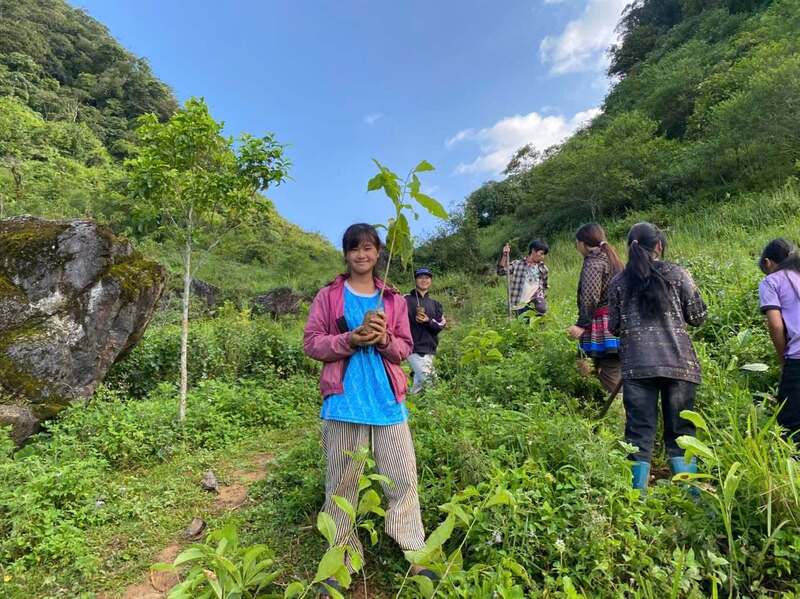
The work then moved across the mountains to Pa Co Commune in Phu Tho Province. On 9 August, residents of Thung Mai Village planted 2,500 native seedlings to replace trees that had not survived from earlier planting efforts. On difficult restoration sites, some seedling mortality is expected, particularly where soils are poor, slopes are steep, or weather conditions are harsh. Replanting these gaps is therefore an important part of long-term forest restoration, helping maintain planting density while giving the recovering forest another chance to establish successfully.
By September, the restoration season had reached a very different landscape.
On 19 September, nearly 150 local officials, soldiers, and residents gathered in Hai Quang Commune, Ninh Binh Province, for a coastal clean-up and tree-planting activity organized by PanNature and the Hai Quang Commune People’s Committee. Together, participants planted 7,000 casuarina trees along the shoreline.
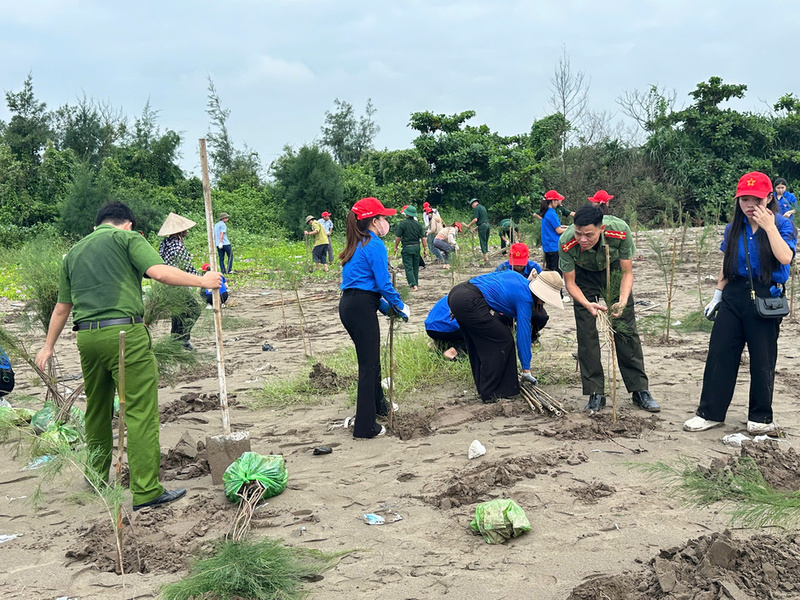
Coastal restoration responds to a different set of ecological and social pressures. In exposed coastal areas, vegetation can help reduce wind impacts, stabilize sandy soils, improve the local environment, and provide an additional layer of protection for nearby communities. As climate change increases pressure on coastal areas, maintaining and restoring these green buffers is becoming increasingly important.
The Hai Quang activity also marked an expansion of PanNature’s Regreening Forests programme beyond its earlier focus on upland natural forest landscapes. Launched in 2022, the programme has supported restoration activities in Son La, Phu Tho, and Gia Lai, working with local communities and partners to restore degraded ecosystems using approaches suited to each landscape.
The work carried out between July and September illustrates why ecological restoration cannot follow a single formula. A degraded natural forest in the mountains requires a different approach from a village roadside or a coastal shelterbelt. Species selection, planting methods, long-term care, and conservation objectives all need to respond to local ecological conditions.
What links these efforts is not simply the number of trees planted, but the longer process that follows: tending young trees, supporting natural regeneration, monitoring survival, protecting recovering habitats, and maintaining the involvement of the people who live closest to them.
From mountain forests to coastal shores, restoration is ultimately a long-term process of helping landscapes regain their ecological functions—and giving nature the conditions it needs to recover.
Related Posts