As the UN Biodiversity Conference (COP 16.2) convened last week…
Pesticides and Agricultural Chemicals in Vietnam’s Uplands are Creating a Silent Crisis
In many rural and mountainous areas of Vietnam, the use of pesticides, herbicides, fungicides, and other agricultural chemicals has become an increasingly routine part of farming. Across sloping maize fields, cassava plots, vegetable gardens, fruit orchards, and upland agroforestry systems, chemical inputs are being applied more frequently, more intensively, and often with growing dependence. What is particularly concerning is that this trend is no longer simply a matter of crop protection or farm management. It is becoming a broader environmental and social problem – one that is quietly undermining ecosystems, contaminating water sources, harming human health, and weakening the long-term resilience of rural livelihoods.
This issue should not be understood merely as a technical matter of pesticide misuse or as an awareness problem among farmers. In Vietnam’s mountainous landscapes, where farms are often located on steep slopes, close to forests, streams, and villages, agricultural chemicals rarely remain confined to the fields where they are sprayed. Their impacts extend far beyond the plot of land where they are used. They move through soil, water, food webs, and communities. They accumulate across landscapes. And because these upland areas are often ecologically sensitive and hydrologically important, the consequences can be severe and far-reaching.
From Farm Input to Structural Dependency
Research from Southeast Asia’s mountainous regions, including Vietnam, shows that pesticide use has risen sharply alongside the expansion of commercial agriculture, crop intensification, and market pressure on upland farmers (Lamers et al., 2013). In places where farming once relied more heavily on traditional practices and local ecological knowledge, the shift toward market-oriented production – whether for maize, vegetables, fruit, coffee, cinnamon, acacia, or other upland commodities – has often gone hand in hand with a rapid increase in synthetic pesticides, herbicides, and fertilizers.
At the national level, this broader trend is also well documented. According to Lamers et al. (2013), pesticide use in Vietnam increased dramatically over the past few decades, from around 20,000 tons per year in the early 1990s to approximately 77,000 tons per year by the late 2000s. While the composition of the pesticide market has evolved since then, the underlying pattern remains clear: in many farming systems, chemical inputs have become deeply embedded in production.
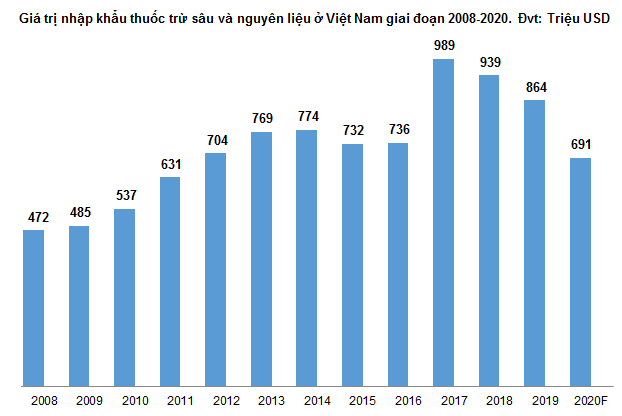
The problem is that once pesticides become the fastest, easiest, and seemingly most reliable option, they also become difficult to step away from. This is what can be described as a form of structural chemical dependency in upland agriculture – not simply in a rhetorical sense, but as a system shaped by yield pressure, pest risk, market demands, agro-input supply chains, and the lack of accessible ecological alternatives.
Pesticides Can Damage Entire Ecosystems
One of the most persistent misconceptions about pesticides is that they mainly affect their intended targets. In reality, a growing body of scientific evidence shows that pesticides can harm a wide range of non-target organisms: species that do not threaten crops, but play essential roles in maintaining ecological balance.
A large-scale meta-analysis published in Nature Communications, drawing on 20,212 estimates of pesticide effects from 1,705 experimental studies, found that insecticides, herbicides, and fungicides have negative effects across multiple trophic levels, affecting soil microorganisms, plants, insects, aquatic invertebrates, and other organisms. The authors concluded that pesticides are likely contributing significantly to biodiversity decline at broad scales (Wan et al., 2025).
This is especially alarming in Vietnam’s uplands, where cultivated areas are often interwoven with natural forests, scrub vegetation, streams, and other semi-natural habitats. A single pesticide application may not only kill target pests, but also affect pollinators such as bees and butterflies, natural pest enemies such as lady beetles, spiders, and parasitoid wasps, and a range of organisms that support healthy agroecosystems. When these beneficial species decline, farming systems become more ecologically fragile and, paradoxically, often more vulnerable to pest outbreaks over time.
Amphibians such as frogs and toads are among the most vulnerable groups. A review by Kenko et al. (2022) found that pesticides can cause both lethal and sublethal effects in amphibians, including mortality, developmental abnormalities, impaired movement, reduced growth, and lower long-term survival. In mountainous landscapes, where amphibians depend on small streams, wet soils, and forest edges, pesticide contamination can quietly erode key components of local food webs and ecological functioning.
In short, pesticides do not simply remove a few leaf-eating insects. They can disrupt entire networks of ecological relationships – between crops, pollinators, predators, amphibians, aquatic organisms, and the natural processes that help landscapes regulate themselves.
From Upland Fields to Streams, Rivers, Lowlands, and Cities
If ecosystems are among the first casualties of pesticide overuse, water is often the most far-reaching pathway of impact.
In upland areas, steep slopes, shallow soils, heavy rainfall, and rapid surface runoff make agricultural chemicals especially prone to being washed away. After a heavy rain, pesticide residues on leaves, soil surfaces, and exposed fields can be carried into small streams, ponds, lower-lying fields, and eventually larger river systems.
Research in the Chieng Khoi catchment in northern Vietnam found that pesticide losses through runoff at the watershed scale ranged from 0.4% to 16% of the total amount applied, depending on the active ingredient (Lamers et al., 2011). At first glance, this may seem like a relatively small percentage. But when repeated across multiple seasons, across large areas, and involving toxic compounds, such losses can create significant pressure on surface water quality and aquatic ecosystems.
The World Bank’s report on agricultural pollution in Vietnam also warns that pesticide residues and fertilizer runoff are major contributors to water and soil pollution in crop production systems, particularly where chemical use is poorly managed or farming takes place close to water sources (World Bank, 2017).
Importantly, water does not remain where it starts. A stream in an upland commune may be the headwater of a much larger river system that supports downstream farms, wetlands, reservoirs, towns, and cities. This means that pesticide contamination in mountainous agriculture is not just an upland issue.
Studies in Vietnam have documented pesticide residues in rivers, irrigation canals, lakes, and sediments for decades. Hung et al. (2002) found organochlorine pesticide contamination in surface waters in and around Hanoi, with the highest contamination levels observed in rivers, followed by irrigation canals, lakes, and wells. More recently, research along the Red River from Hanoi to Nam Dinh also detected organochlorine pesticides and PCBs in water and sediments, with ecological risk concerns at several sampling points (Trinh et al., 2022).
In other words, a pesticide sprayed on a hillside today may not remain in the field where it was applied. It may become part of a wider pollution burden moving through an entire watershed – affecting aquatic life, drinking water systems, irrigation networks, and ecological health far beyond the original site of use.
The First Person Poisoned is Often the One Holding the Sprayer
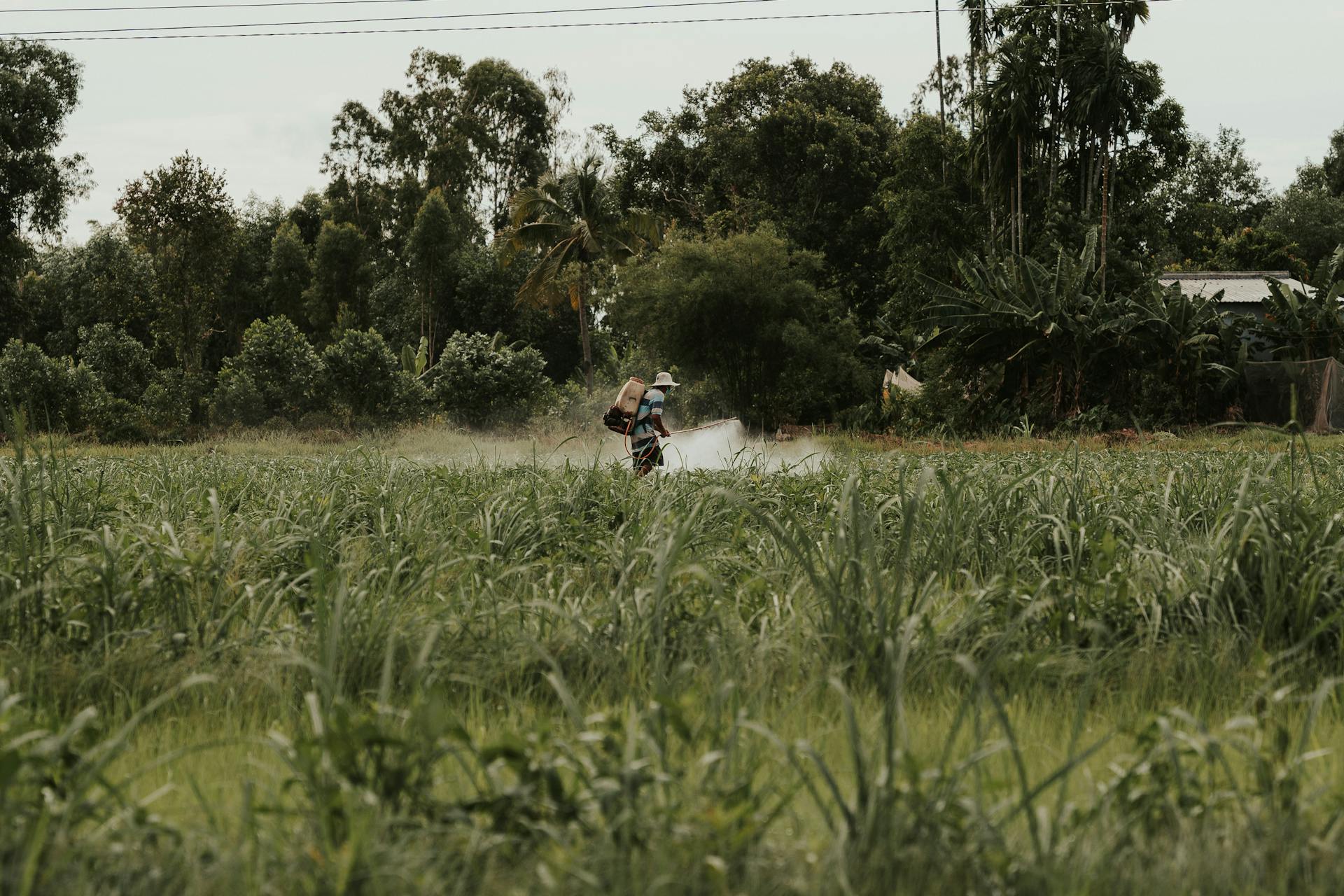
While ecosystems and water bodies absorb the broader environmental burden, the most immediate human risk is often borne by the person applying the chemicals.
In many rural and mountainous areas, pesticide use still takes place under unsafe or only partially safe conditions: mixing chemicals with bare hands, spraying against the wind, using inadequate masks or no eye protection, washing equipment near water sources, storing pesticides inside the home, or disposing of containers improperly. These practices should not be simplistically interpreted as negligence. In many cases, they reflect limited access to safety information, protective equipment, appropriate training, and realistic alternatives.
A study in Tu Ky district, Hai Duong province, found that farmers regularly exposed to pesticides and herbicides reported high rates of eye, otolaryngological symptoms, skin, and gastrointestinal problems, with higher prevalence in intensive vegetable-growing communes than in rice-growing areas (Huyen et al., 2020). In another study, Dasgupta et al. (2007) documented relatively high poisoning rates among farmers in the Mekong Delta exposed to organophosphate and carbamate pesticides, demonstrating that pesticide poisoning is not a hypothetical risk but a real occupational health issue in Vietnam.
What makes this particularly dangerous is that pesticide exposure does not always present as a dramatic acute poisoning incident. Often, it begins with symptoms that are easily ignored or normalized: burning eyes, headaches, dizziness, nausea, fatigue, skin irritation, chest tightness, or mild breathing difficulties. Repeated low-level exposure across many farming seasons may create cumulative burdens on the nervous system, liver, kidneys, endocrine function, and other aspects of long-term health.
In mountainous areas, these risks are often amplified because production and daily life are closely intertwined. Homes may sit beside fields. Children play near sprayed areas. Work clothes are washed at home. Women, older people, and children – who may not be directly applying pesticides – can still be exposed through air, water, contaminated surfaces, food, or household environments. The first person poisoned may be the one carrying the sprayer, but they are rarely the only one at risk.
A Systemic Failure
One of the most damaging mistakes in public discussion is to frame pesticide overuse primarily as an issue of individual farmer behavior. This is both unfair and ineffective.
Yes, farmers are the ones applying the chemicals. But in many cases, they are operating within a system that rewards fast, visible, and short-term risk reduction. As agriculture becomes more commercialized, the pressures also change: higher yields, cleaner-looking produce, more uniform crops, fewer visible pests, tighter harvest schedules, and stronger buyer expectations. A single pest outbreak or a rejected crop can mean a serious financial loss.
Lamers et al. (2013) show that rising pesticide use in mountainous areas is closely tied to commercialization, monocropping, intensification, and the rapid expansion of agro-input markets. In many places, farmers can easily access pesticides through shops, informal advice networks, or neighbors, but have far less access to integrated pest management (IPM), ecological extension services, diversified farming models, agroforestry systems, or biological control options.
There is also a dangerous feedback loop. The more pesticides are used, the more natural enemies decline. The more natural enemies decline, the more pest outbreaks become likely. The more pest outbreaks occur, the more farmers feel they need to spray again. This is a form of pesticide trap: chemicals are initially used to reduce risk, but over time they can make farming systems more ecologically unstable and more dependent on those same chemicals (Wan et al., 2025).
In this sense, pesticide overuse is not simply the result of poor farmer choices. It is a failure of extension systems, agro-input governance, market structures, risk management, and public policy.
Is There a Way Out?
The most important question is whether it is possible to significantly reduce chemical dependency in upland agriculture while still protecting yields and livelihoods. The answer is yes – but not through a single intervention, a short campaign, or a moral appeal alone.
The way forward begins with a different way of thinking: instead of asking how to eliminate every organism that threatens crops, we need to ask how to restore the health of farming ecosystems. That means scaling up integrated pest management (IPM), protecting and restoring natural enemies, diversifying crops, expanding agroforestry, maintaining soil cover, using biological traps and biopesticides, creating no-spray buffer zones near streams and forests, and improving the collection and safe disposal of pesticide containers.
But it would be deeply unfair to expect farmers to manage this transition alone. Real change requires public support: practical field-based extension, locally adapted demonstration models, technical and financial support during the transition period, and reforms in both input and output markets. As long as markets reward “perfect-looking” produce achieved through chemical dependency, and as long as input supply systems promote product sales more aggressively than ecological solutions, the pesticide backpack will remain difficult to put down.
Policy Directions that Deserve Urgent Attention
From the perspective of biodiversity conservation, water security, and public health, reducing chemical dependency in Vietnam’s mountainous agriculture should be treated as a cross-sector policy priority, not merely a crop protection issue. Several policy directions deserve serious consideration.
First, tighten control over high-risk active ingredients and strengthen monitoring in headwater areas, forest margins, and biodiversity-sensitive landscapes. Priority should be given to reviewing, restricting, or phasing out highly hazardous or ecologically damaging active ingredients, especially in areas near streams, reservoirs, natural forests, protected areas, and ecological corridors.
Second, shift from input management to ecological and health risk management. Regulation still tends to focus heavily on product registration and commercial circulation. Greater emphasis is needed on risk-based monitoring at the landscape and watershed scale, including residue surveillance in surface water, sediments, headwater farming zones, and ecologically sensitive areas.
Third, reform agricultural extension toward ecological, practical, and upland-appropriate models. IPM, agroforestry, natural enemy restoration, crop diversification, and biological controls should move beyond technical slogans and become real support programs with field demonstrations, farmer-friendly communication, and sustained accompaniment.
Fourth, improve oversight of agro-input retail and pesticide advice linked to sales. In many rural areas, agrochemical shops function as de facto extension channels, but their primary incentive is product sales. Stronger regulation, clearer accountability, improved training standards, and more transparent risk communication are needed.
Fifth, create dedicated transition support for upland and headwater production areas. Landscapes that play critical roles in biodiversity conservation, watershed protection, and ecological stability should receive tailored support packages—not only to increase productivity, but to reduce chemical use, restore soils, protect water, and maintain sustainable livelihoods.
Sixth, integrate pesticide reduction into conservation, restoration, and watershed governance agendas. Forest protection, ecosystem restoration, protected area management, OECMs, and community-based conservation cannot succeed if agricultural chemical pressure from surrounding production landscapes is ignored. Reducing chemical dependence should be treated as a core component of landscape-level conservation and restoration strategies.
Conclusion
An agricultural system that looks clean because it is free of visible pests is not necessarily a healthy one. If the cost of that appearance is exhausted soil, contaminated streams, disappearing beneficial insects, declining amphibians, chronic farmer exposure, and rising risks for downstream communities, then the problem is no longer just technical. It is a deeply flawed trade-off.
In Vietnam’s mountainous regions – where farms are closely connected to forests, streams, biodiversity, and community livelihoods – pesticide use must be understood as a landscape-level environmental and social issue. It cannot be addressed simply by calling for greater awareness. What is needed is a gradual but determined process of reducing structural dependence on agricultural chemicals – through policy reform, ecological extension, better input governance, more responsible markets, and a broader shift in how we define a truly healthy farming system.
REFERENCES
Dasgupta, S., Meisner, C., Huq, M., & Wheeler, D. (2007). Pesticide poisoning of farm workers—Implications of blood test results from Vietnam. International Journal of Hygiene and Environmental Health, 210(2), 121–132. https://doi.org/10.1016/j.ijheh.2006.08.006
Hung, D. Q., Thiemann, W., & Yen, P. T. B. (2002). Contamination by selected chlorinated pesticides in surface waters in Hanoi, Vietnam. Science of the Total Environment, 299(1–3), 95–103. https://doi.org/10.1016/S0045-6535(01)00342-3
Huyen, V. N., Thi Thu, N. T., Van Trung, N., & others. (2020). Effects of pesticides on farmers’ health in Tu Ky district, Hai Duong province, Vietnam. Sustainable Futures 2, 100026 (2020). https://doi.org/10.1016/j.sftr.2020.100026
Kenko, D. B. N. (2022). Effects of Pesticides on Amphibians and Tentative Solutions: Review. Journal of Asian Scientific Research, 12(4), 218–236. https://doi.org/10.55493/5003.v12i4.4647
Lamers, M., Anyusheva, M., La, N., Nguyen, V. V., & Streck, T. (2011). Pesticide Pollution in Surface- and Groundwater by Paddy Rice Cultivation: A Case Study from Northern Vietnam. CLEAN – Soil, Air, Water, 39(4), 356–361. https://doi.org/10.1002/clen.201000268
Lamers, M., Schreinemachers, P., Ingwersen, J., Sangchan, W., Grovermann, C., & Berger, T. (2012). Agricultural Pesticide Use in Mountainous Areas of Thailand and Vietnam: Towards Reducing Exposure and Rationalizing Use. In Springer Environmental Science and Engineering (pp. 149–173). Springer Berlin Heidelberg. https://doi.org/10.1007/978-3-642-33377-4_4
Trinh, T. T., Nguyen, T. T. H., & others. (2022). Assessment of concentration and ecological risks of organochlorinated pesticides and PCBs in the Red River from Hanoi to Nam Dinh. VNU Journal of Science: Natural Sciences and Technology, 38(1). https://doi.org/10.25073/2588-1140/vnunst.5170
Wan, N.-F., Fu, L., & Scherber, C. (2025). Pesticides have negative effects on non-target organisms. Nature Communications, 16, Article 1442. https://doi.org/10.1038/s41467-025-56732-x
World Bank. (2017). An overview of agricultural pollution in Vietnam: The crop sector. World Bank. https://doi.org/10.1596/29241
Related Posts