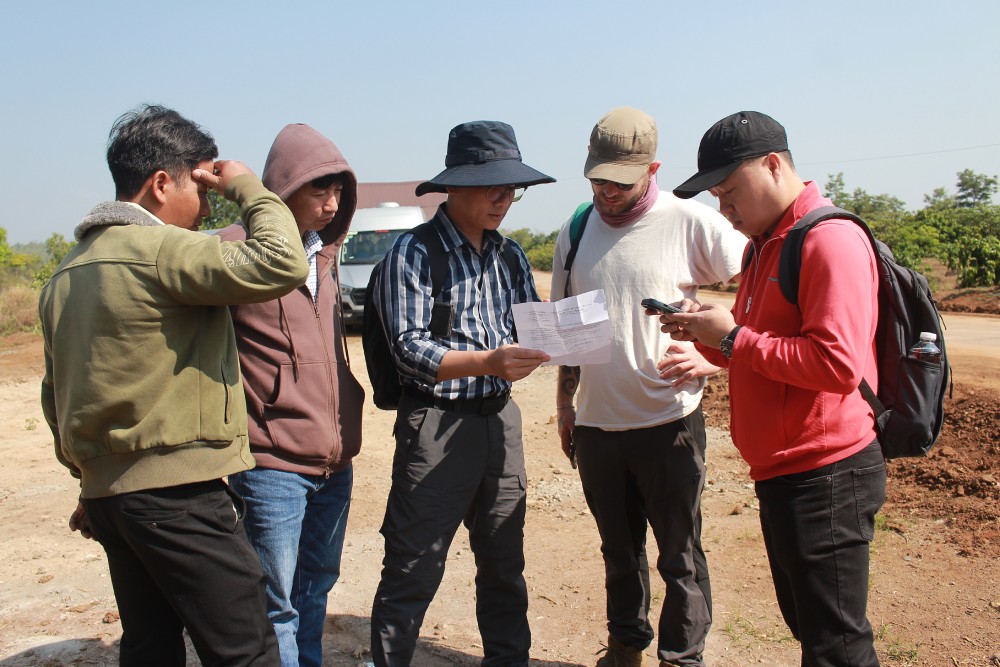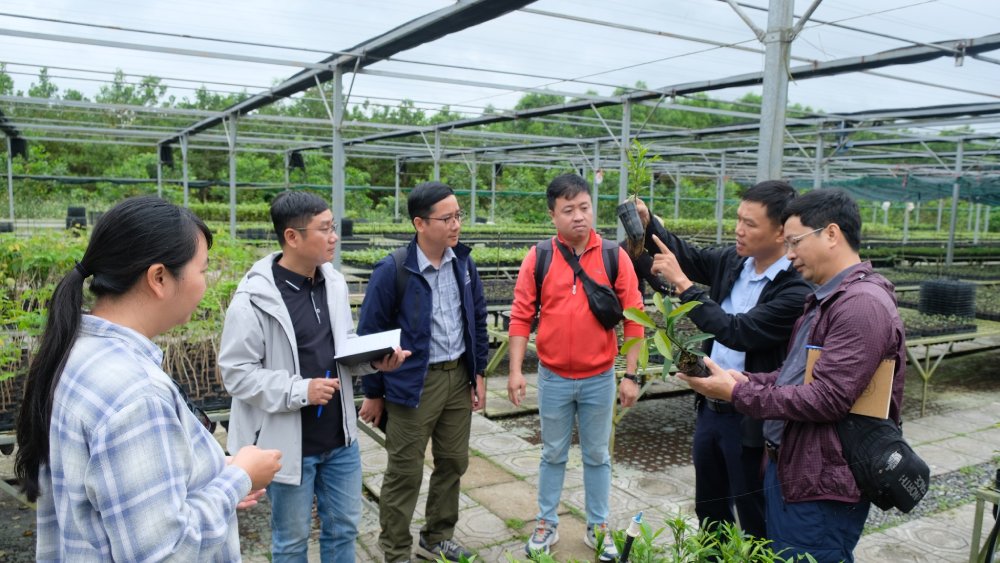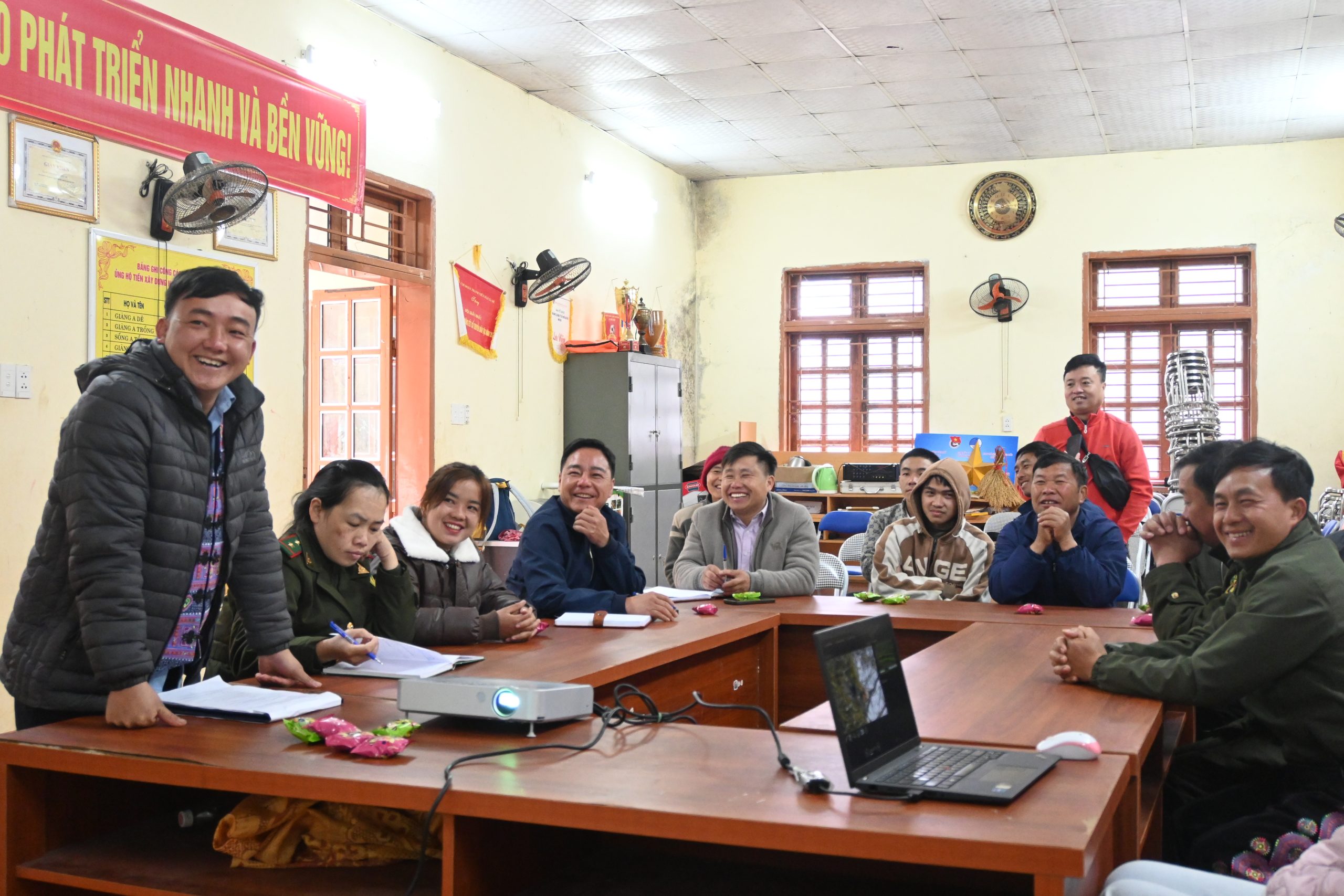
From March 17–20, 2026, within the framework of the Gia…
Rapid development, legal changes put pressure on Vietnam’s forestland
- A planned tourism and residential development on Vietnam’s Phu Quoc Island, has led to the forced relocation of 508 households and the clearing of 57.7 hectares (142.5 acres) of forest within Phu Quoc National Park.
- The project is just one of 286 development projects planned for the island. Since July 2024, authorities there have authorized the conversion of more than 180 hectares (445 acres) of forest, the majority of which is “special use” forest, meaning it is deemed to be of particular ecological or scientific importance.
- The island has seen a spike in forest conversion approvals following legal changes in 2024 that reduced central-government oversight of forest-conversion approvals, and that expanded the list of project types for which natural forest can be converted.
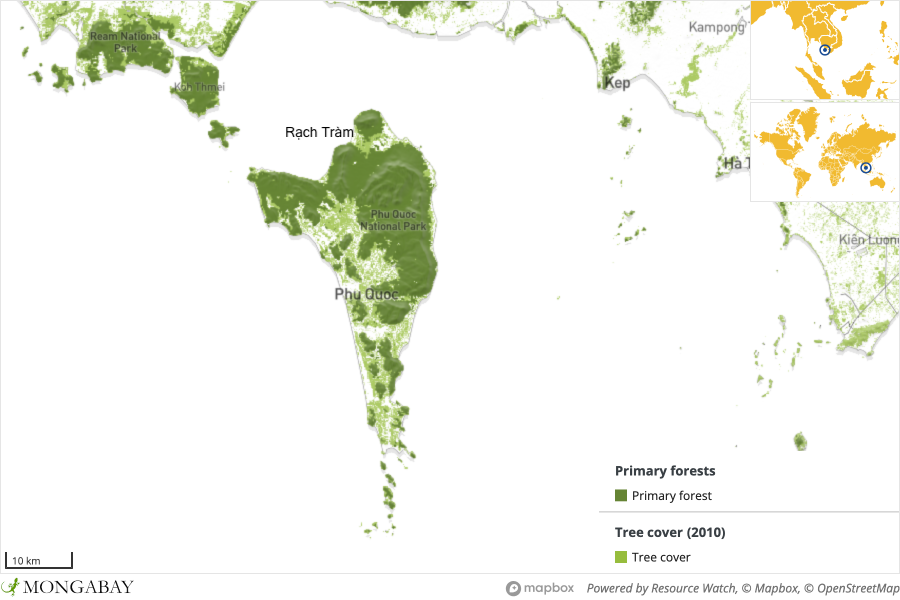
Rach Tram fishing village stretches along the northern coast of Vietnam’s Phu Quoc Island. Surrounded on three sides by the forests of Phu Quoc National Park and facing the Gulf of Thailand on the other, with Cambodia visible across the water, the village has until recently been part of a pristine river-forest-sea ecosystem.
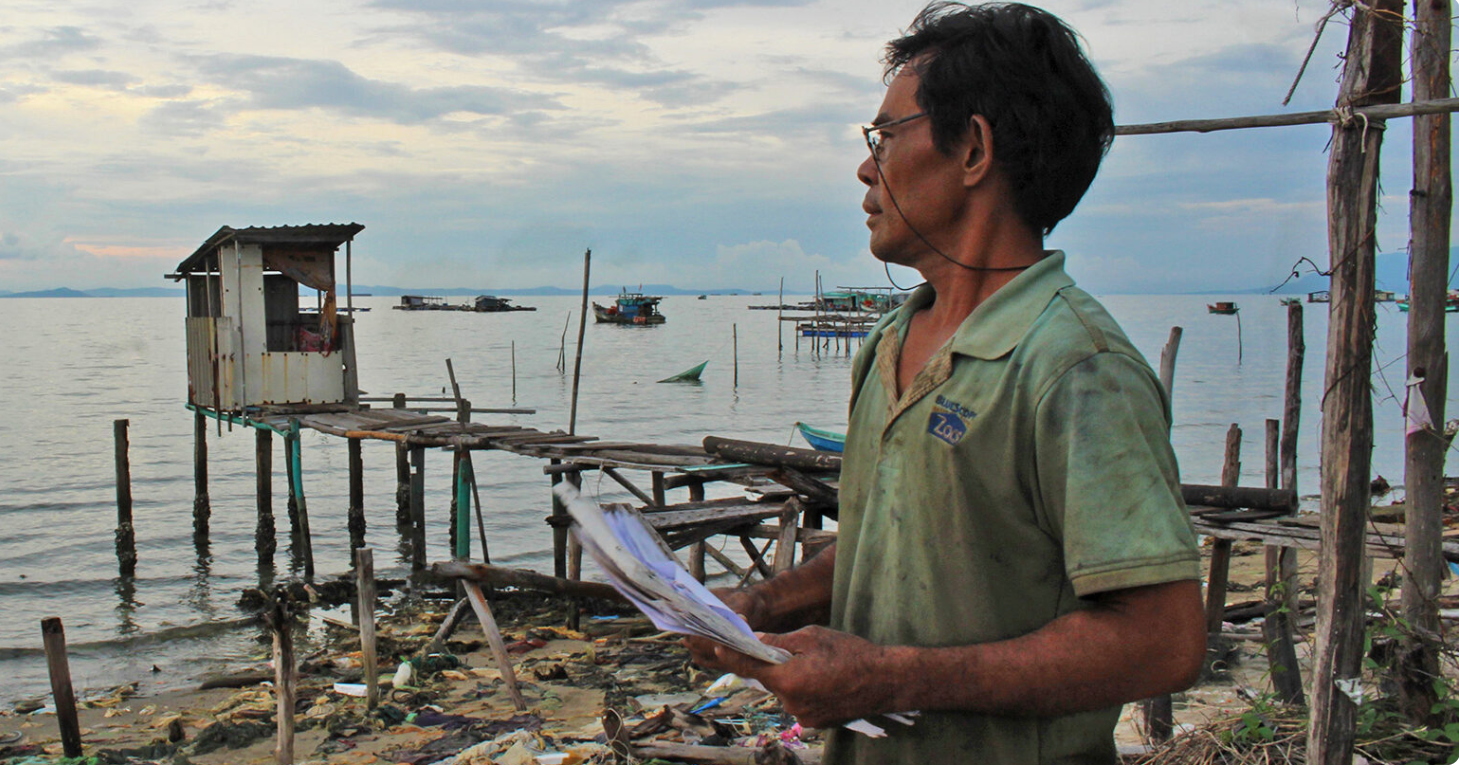
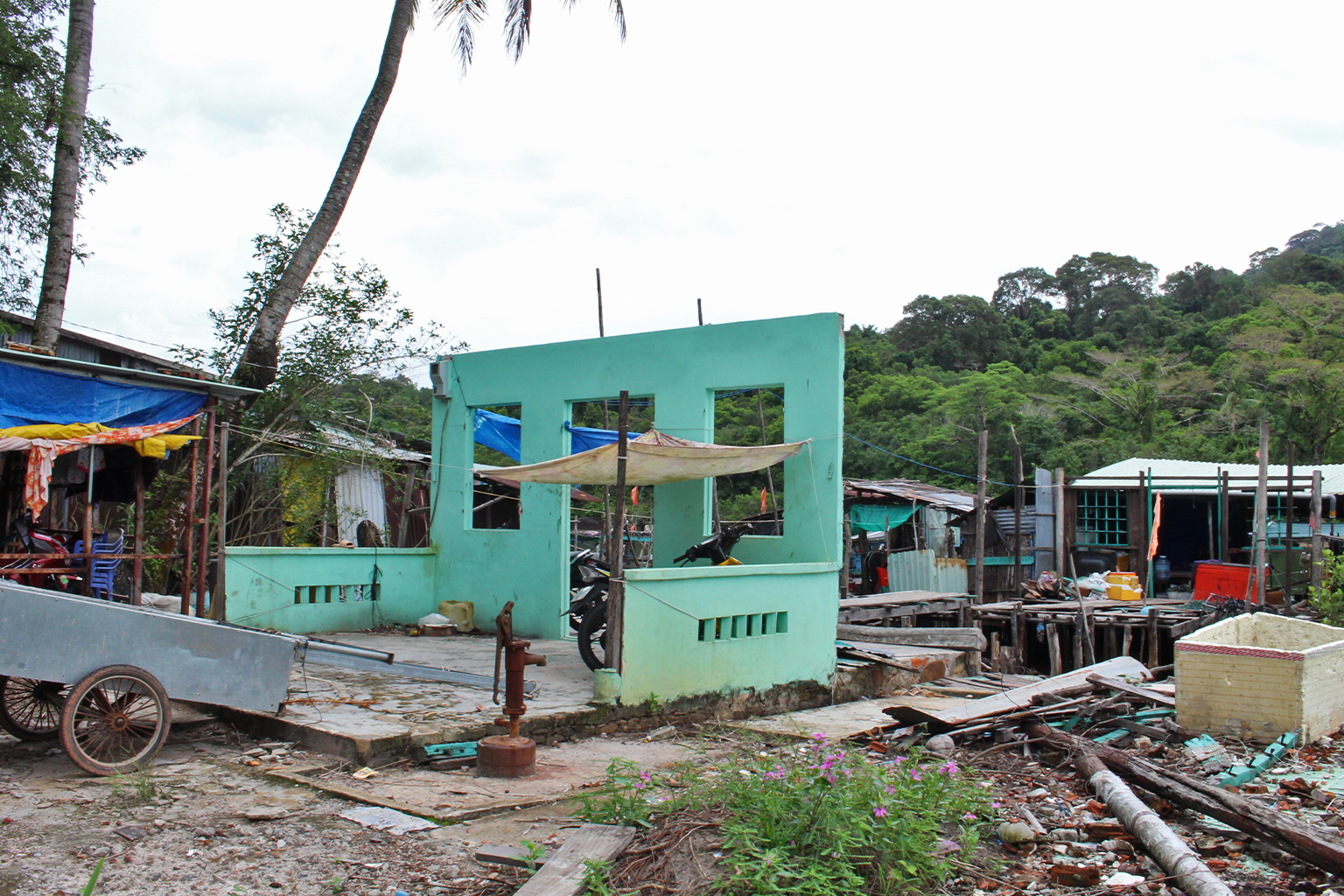
For generations, Rach Tram was accessible only by water or by a narrow dirt path running through Phu Quoc National Park. However, during a visit in late April 2025, the village was in a state of disarray, with homes dismantled and land dug up for construction.
In 2017, the former Kien Giang Provincial People’s Committee (former Kien Giang province is now part of the An Giang province), the local governmental body, approved the Rach Tram Ecotourism and Residential Project. Then, in 2023, the existing pathway through the forest was widened into a broad asphalt road, with several adjacent forested areas marked for potential future development projects.
The Rach Tram project, covering 172 hectares (425 acres), is being developed by Cityland Group — one of Vietnam’s leading real estate firms. It will eventually host multiple resorts, luxury villas and high-rise residential developments. To make way for it, 508 households in Rach Tram will be forced to relocate and 57.7 hectares (142.5 acres) of special-use forest within Phu Quoc National Park will be cleared. This forest is dense with large melaleuca trees. According to people in the village, the forest was home to deer, wild boars, monkeys and snakes before it was cleared. The villagers also visited the area to catch shrimp, crabs and fish for food or income.
The former Kien Giang Provincial People’s Council approved the forest’s land-use conversion in mid-November 2024. By the time Mongabay visited in April, about 15 hectares (37 acres) of forest had already been cleared for a resettlement area. Houses were built, infrastructure in place and land plots laid out, yet resettlement area remained largely unoccupied.
Serving the public interest
Under Vietnamese law, all land is collectively owned, with the state granting land-use rights to individuals. People who hold these rights can use the land long-term, and they are allowed to transfer, sell, inherit, donate or mortgage their land-use rights, but they do not own the land itself. Therefore, the state has the right to acquire the land at any time when necessary.
According to the 2013 Land Law and its 2024 amended version, if a project is deemed to serve public interests, clearance and compensation are set according to official compensation rates, with additional payment for relocation and resettlement. For other types of projects, compensation must be determined through direct agreement between landowners and project investors.
Former Kien Giang authorities have classified the Rach Tram Ecotourism and Residential Area project as being allocated “for socio-economic development and in the national and public interest,” meaning that clearance and acquisition follow the compensation amounts set by the state.
Many in Rach Tram say these rates are too low to allow them to maintain their standard of living.
In 2018, Huunh Ngoc Van, a resident of Rach Tram, received a land acquisition notice and a little over 340 million dong ($13,000) in compensation and resettlement support from the Phu Quoc People’s Committee. However, he remains in his old seaside home, saying he has nowhere else to go. “The authorities have yet to provide me with a resettlement plot in Rach Tram as promised,” he says with frustration.
Van faces three resettlement options: accepting a resettlement plot in town by paying a 460 million dong ($17,580) infrastructure fee (about 12% more than his compensation), buying a pre-built house in the resettlement area for 1.2 billion dong ($45,870) (more than three times the compensation he’s been given), or purchasing a plot in another resettlement area about 10 kilometer (6.2 miles) away from Rach Tram and the sea. None of these options satisfy him, he says, as the pre-built house is unsuitable for living or running his boat repair business, which he started after losing his fishing vessel in a storm a year ago. Though modest, this job supports his family and two young children.
Van, like many residents, also rejects the distant resettlement option, saying it is far from their homeland and unsuitable for their fishing livelihoods.
Many lawyers argue that “the interests of the state, investors, and land users are not fairly balanced” in development projects. Some projects, they say, primarily serve business interests, but investors do not want to negotiate directly with land users and, instead, exploit vague legal provisions to trigger state-led land acquisition. In this case, a supervisory delegation of the National Assembly’s Standing Committee has also requested that Kien Giang authorities clarify classification of the Rach Tram project as one serving “socio-economic development, national, and public interests.”
“I am not opposing the government. They say this project will help develop the local economy and improve people’s lives, but the local authorities are acquiring people’s land with very low compensation to hand it over to private company,” Van says with frustration.
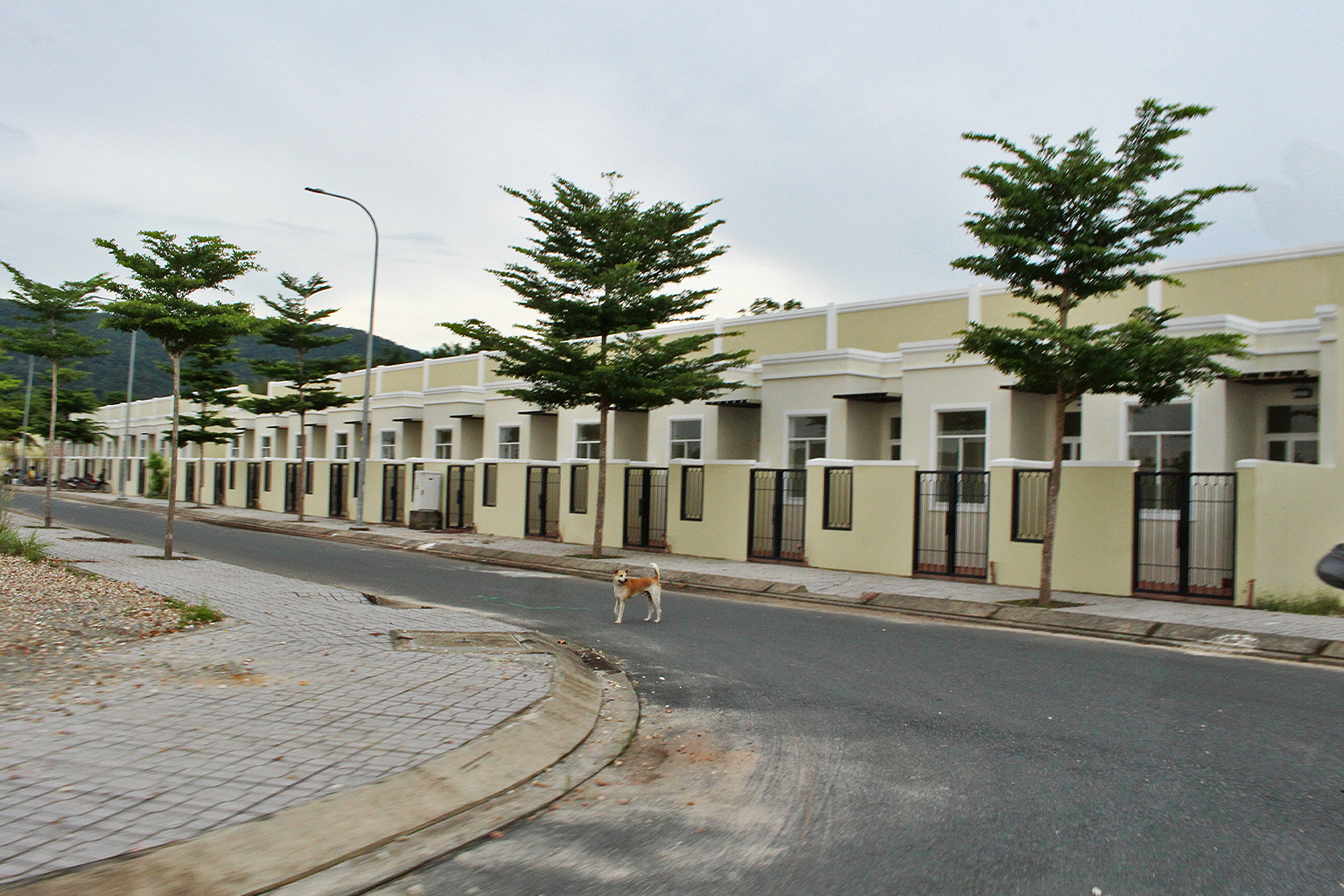
Van’s story is not unique in Rach Tram. Many who received resettlement plots have sold them, abandoned their livelihoods and moved elsewhere, or simply find themselves in limbo.
Some have also turned to the forest. Many people are illegally building houses on land belonging to Phu Quoc National Park. In some cases, residents who were relocated from their homes live in rented rooms within these illegally built houses.
Cityland, the developer, says responsibility for the relocation process and compensation lies with local authorities. “So far, the project has built a new school and a resettlement area, including social housing for local residents in Rach Tram. However, compensation, resettlement support and land acquisition in Rach Tram are the responsibility of the Phu Quoc authorities. Cityland only receives ‘cleared land’ to carry out the project,” a Cityland representative tells Mongabay by phone, referring to land handed over to developers by the state. The company did not respond to specific questions regarding protecting the interests of local people or about the environmental impact of the project.
Similarly, Mongabay’s email and phone inquiries to the Bai Thom Commune People’s Committee, which Rach Tram falls within, and to Phu Quoc City People’s Committee have gone unanswered.
Nguy?n Th? Bé, a Rach Tram resident, stands beside her demolished home, removed by authorities. She says her family had farmed the land long before Phu Quoc National Park was established in 2001; Google Earth images, however, show the houses appeared only after 2020. Image by Le Quynh for Mongabay.
The risk of further forest loss
The Rach Tram project is just one of nearly 300 projects planned for the island.
In June 2022, the Prime Minister approved the planning of Phu Quoc to become a national and international island tourism city. According to the Phu Quoc Economic Zone Management Board in August 2023, Phu Quoc hosts approximately 286 planned or developed tourism investment projects, spanning over 9,600 hectares (23,720 acres) (nearly 17% of the 56,700-hectare, or 140,100-acre, land area of the island) with total capital exceeding 375 trillion dong ($14.33 billion). Of these, 47 projects — worth nearly 17.4 trillion dong ($665 million) — are operational, while the remainder are under construction or completing investment procedures. The dominance of resort real estate developments underscores a major shortfall in residential housing for locals, whose population is expected to double to 550,000 by 2030.
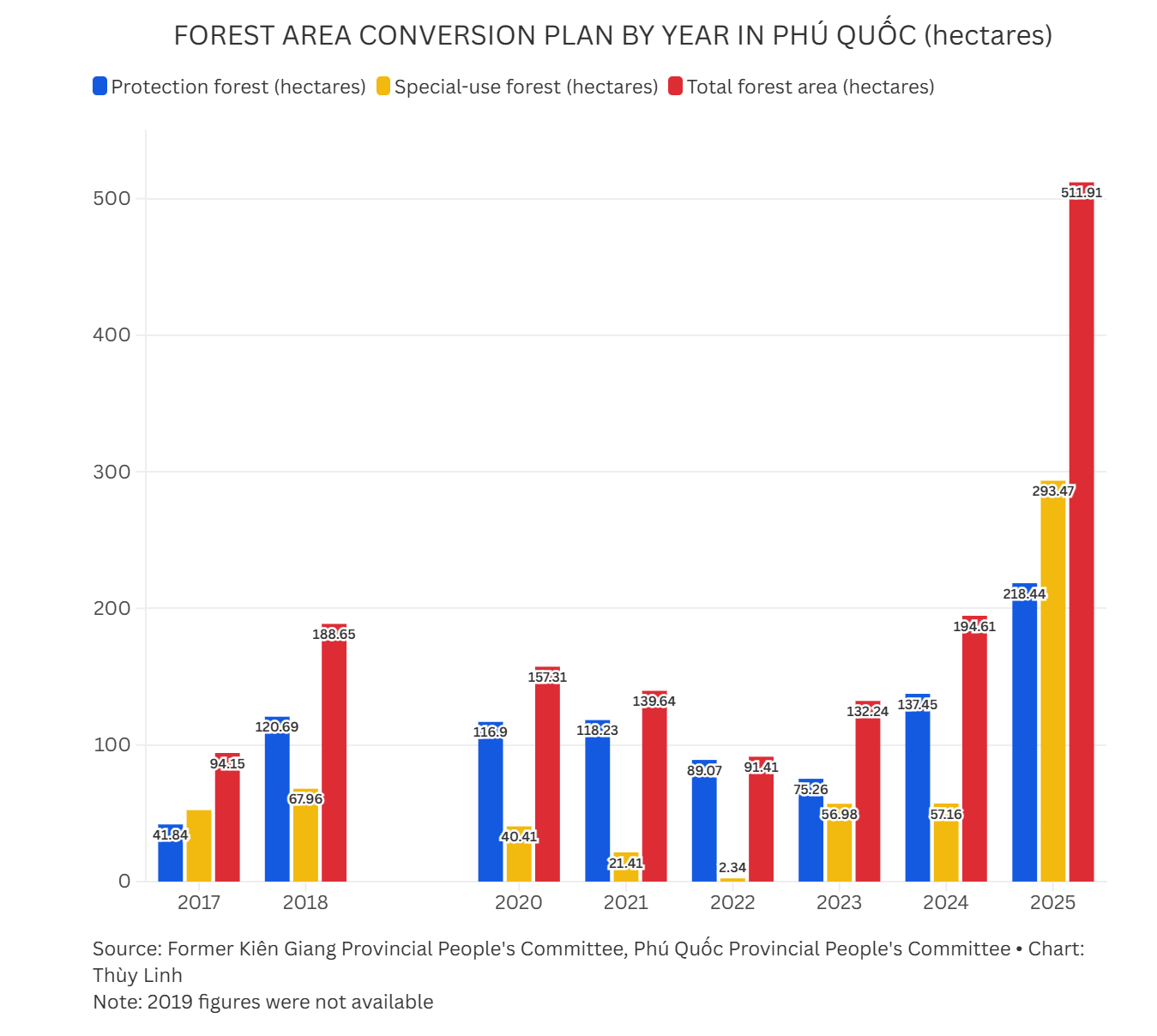
An analysis of planning documents shows that, to accommodate planned projects in 2025, Phu Quoc intends to convert 512 hectares (1265 acres) of forest — significantly more than the average amount of forest conversion in the preceding years. More than half of this area consists of special-use forests, meaning they are deemed by the government to be particularly important for conserving ecosystems and genetic resources.
This spike in land conversion has been enabled by the amended Land Law (June 2024) and Decree 91 (July 2024), which details the implementation of certain provisions of the Forestry Law. The new regulations expand the types of projects eligible for the conversion of natural forest land — adding industrial parks and industrial clusters to a list that already included mineral extraction, eco-tourism, resort and recreational projects. They also give provincial authorities the power to approve forest land conversions for economic development without requiring approval from the National Assembly or the central government, regardless of area size.
Previously, the need for central government approval acted as a significant brake on development plans. Data from the former Ministry of Agriculture and Rural Development (now the Ministry of Agriculture and Environment) shows that, between 2017 and 2019, more than 3,600 projects nationwide sought to convert 183,740 hectares (454,031 acres) of forest. Of these, the government approved only 133 projects, covering a total of 3,325 hectares (8,216 acres).
An analysis of planning documents from Phu Quoc indicates that transferring authority to local governments is already resulting in a significant acceleration of forest conversion.
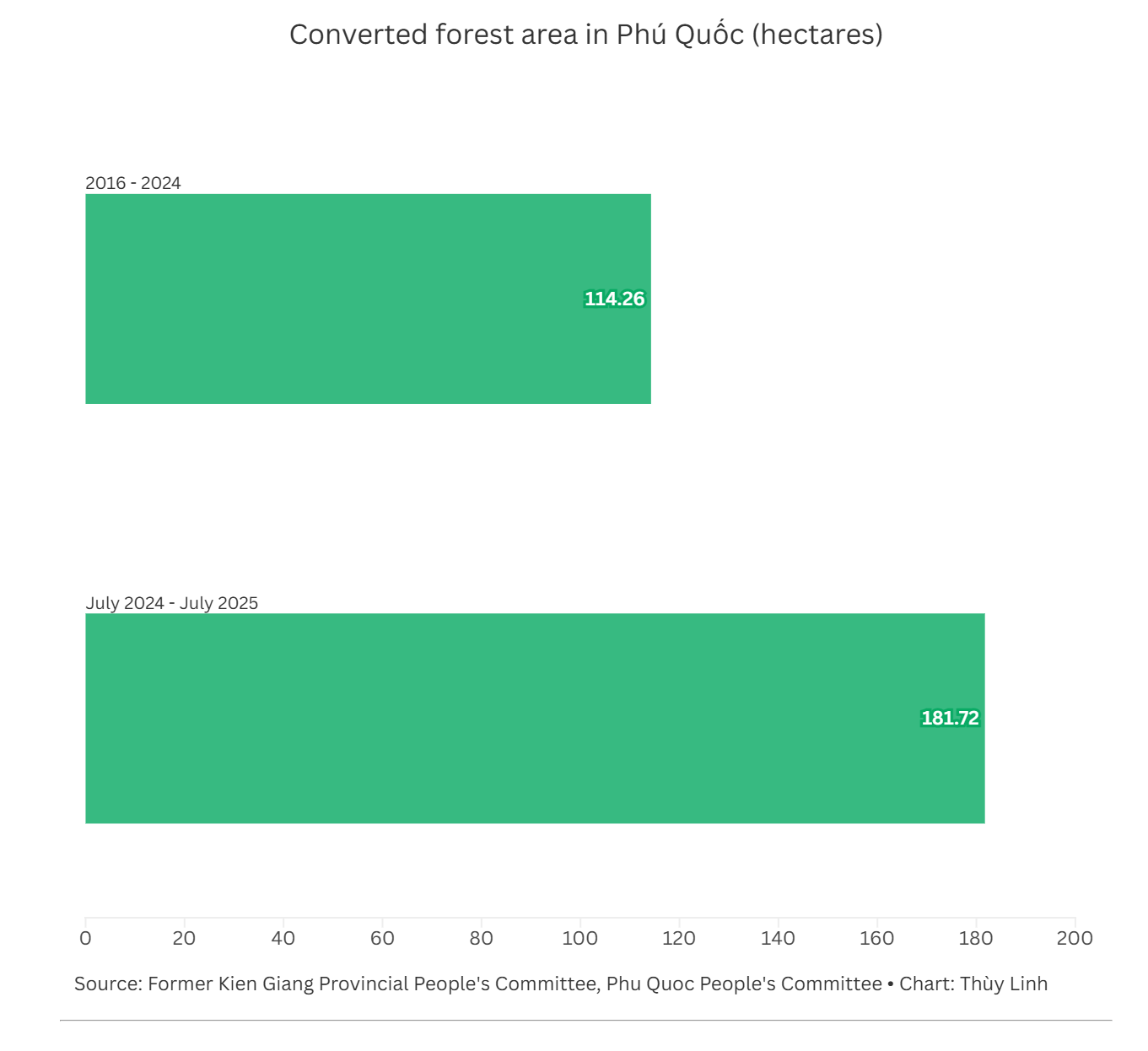
Since the issuance of Decree 91 in July 2024, the former Kien Giang Provincial People’s Council approved the conversion of almost 182 hectares (449 acres) of forest in Phu Quoc, with more than 77% (141 hectares, or 348 acres) comprised of special-use forest, which include parks and reserves, designated for urban tourism projects. By contrast, from 2016 to 2024, a combined total of 114.5 hectares (283 acres) of forest were approved for conversion.
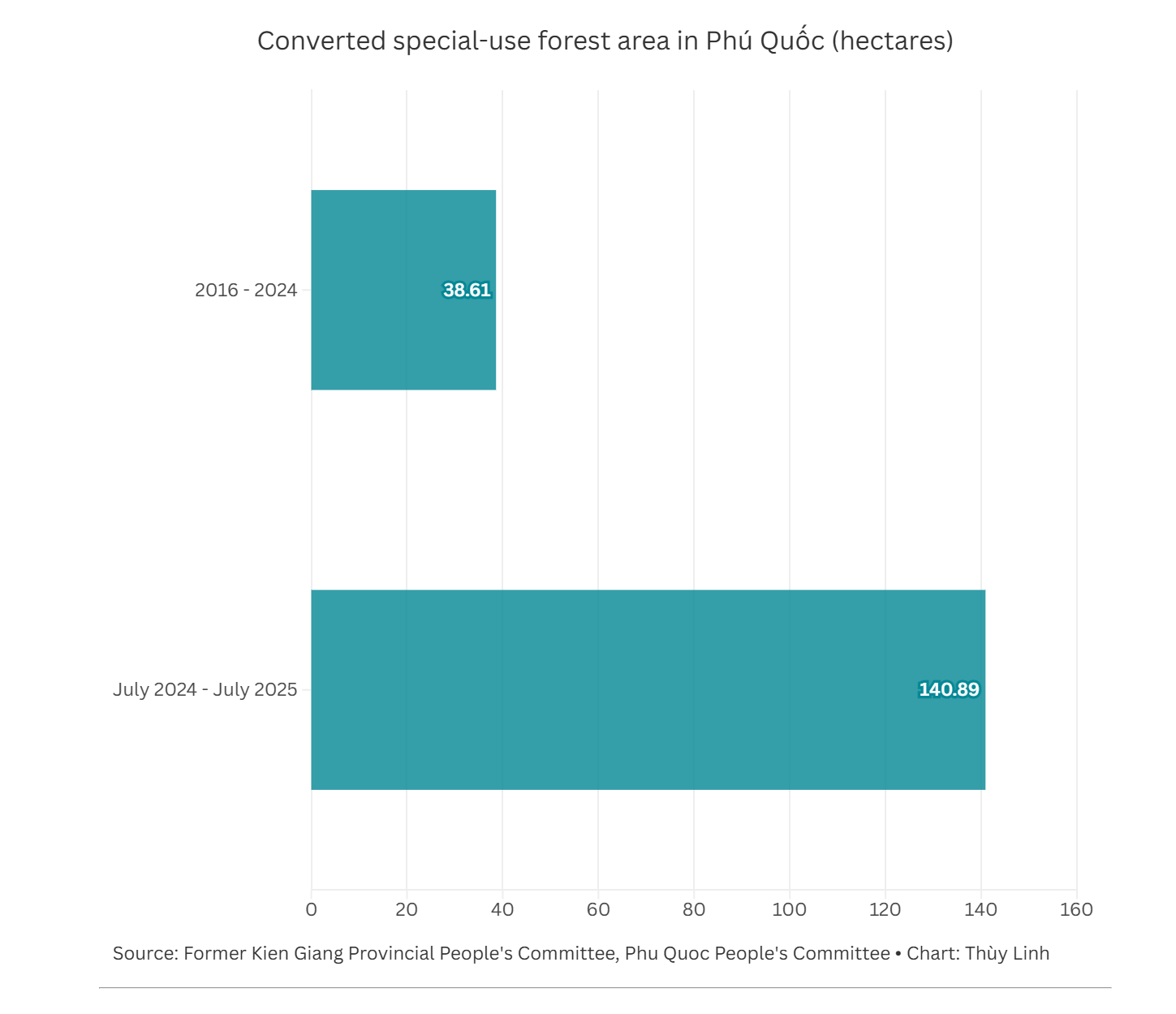
Looking specifically at special-use forests, the 141 hectares (348 acres) converted in Phu Quoc in the year following Decree 91’s issuance, amounts to nearly four times the area converted from 2016 to 2024 (38.6 hectares, 95.4 acres).
Forest conversion is happening at a high rate not only in Phu Quoc but also in other provinces and cities. For example, the former People’s Council of Quang Nam province (now part of Da Nang city) approved the conversion of 2,220 hectares (5,486 acres) of forest in 2025 — 95% of which was production forest ( — for 646 projects. province approved the conversion of 167 hectares (413 acres) of forest in 2025, nearly half of which is protection forest, for 284 projects across the province.
In the 2025-30 period, the former Cam Lam district (now Cam Lam commune, part of the new Khánh Hòa province) plans to convert 3,056 hectares (7,551 acres) of forest, of which 99% is production forest and the rest protection forest.
Forestry trends
According to Vietnam’s forest department, forest cover in the country has increased in recent decades. However, about 75% of this forest cover consists of degraded or recovering forests.
The Ministry of Agriculture and Environment’s shows forest cover rose from 27% in 1990 to 42.03% in 2024, reaching a total of around 14.87 million hectares (36.74 acres) of forestland.
Trinh Le Nguyen, director of the nonprofit PanNature and chairman of the Vietnam Wildlife Conservation Fund project, calls this a commendable achievement amid urbanization and industrialization, placing Vietnam above the global average. However, while the 42.03% figure is statistically accurate, he says, it does not fully capture the on-the-ground reality.
Nguyen explains that under the 2017 Forestry Law, a forest is defined as an area of at least 0.3 hectares (0.74 acres) with a minimum canopy cover of 10% — a definition that puts plantations and newly regenerating forests in the same category as old-growth natural forests. Therefore, while the forest cover figure may be technically accurate, it does not fully reflect the forest ecosystems many envision: those rich in biodiversity and effective in environmental protection.
Nguyen also says that, in reality, sparsely planted areas or deforested hills are sometimes counted as forest if they meet the minimum canopy cover threshold. Conversely, many natural forest areas degraded or destroyed by wildfires or illegal logging may not be fully reflected in the data.
“Although forest area has grown, the average quality has declined. Natural forests — crucial for biodiversity and climate regulation — have sharply diminished over decades due to logging, land conversion to agriculture, and development projects,” Nguyen says.
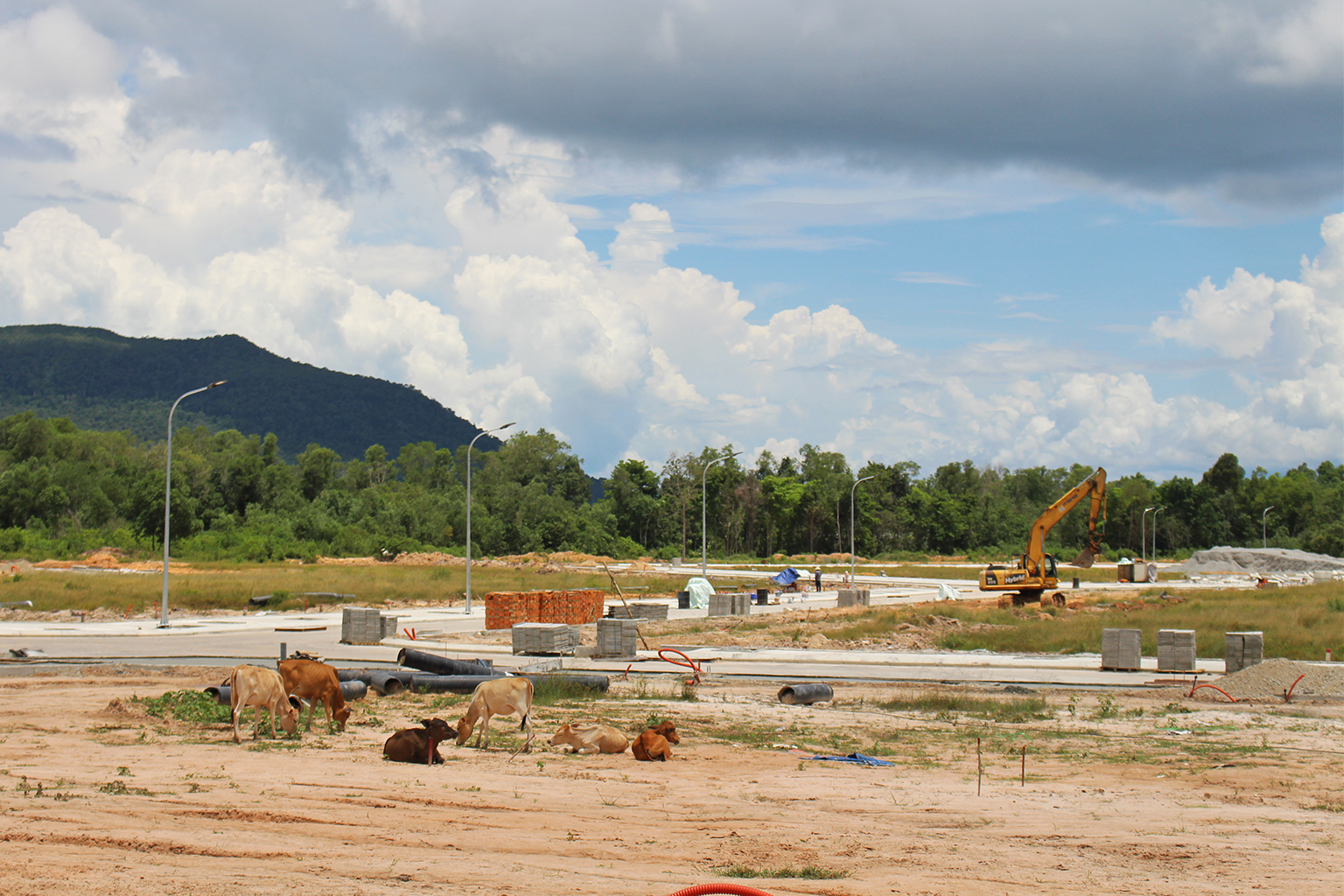
As a result, the conversion of forests like those in Phu Quoc are particularly significant. According to a 2024 report by Phu Quoc National Park authorities, the planned conversion of special-use forests into agricultural land and tourism service areas as planned, along with infrastructure development and the expansion of residential areas, threatens to disrupt ecosystems and habitats, causing a decline of natural forests with high biodiversity.
Nearly 99% of the forest in Phu Quoc National Park is natural forest, says one forestry expert who spoke anonymously due to fears of government reprisal. “The loss of natural forests and special-use forests in places like Rach Tram in particular, and Phu Quoc in general, is particularly serious in the context of Vietnam’s degraded forest land. Unlike forest degradation, wildfires or encroachment — where reforestation is still possible — urban or construction land cannot be converted back to forest land.”
Banner image: Resident Huynh Ngoc Van at his old seaside home, surrounded by demolished houses cleared for the project, late April 2025. Image by Le Quynh for Mongabay.
Le Quynh worked as a full-time journalist for 15 years with leading media outlets in Vietnam. Since November 2019, she has worked as an independent journalist in Vietnam. She lives in Ho Chi Minh City.
This story was produced with support from the Rainforest Reporting Grant in partnership with the Pulitzer Center.
Source: Mongabay
Related Posts