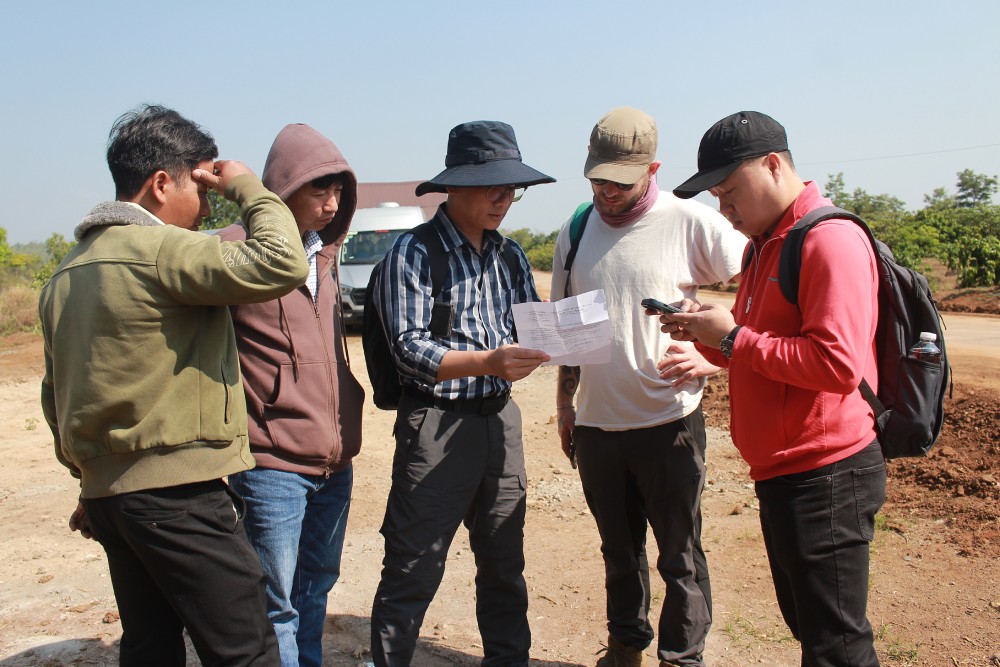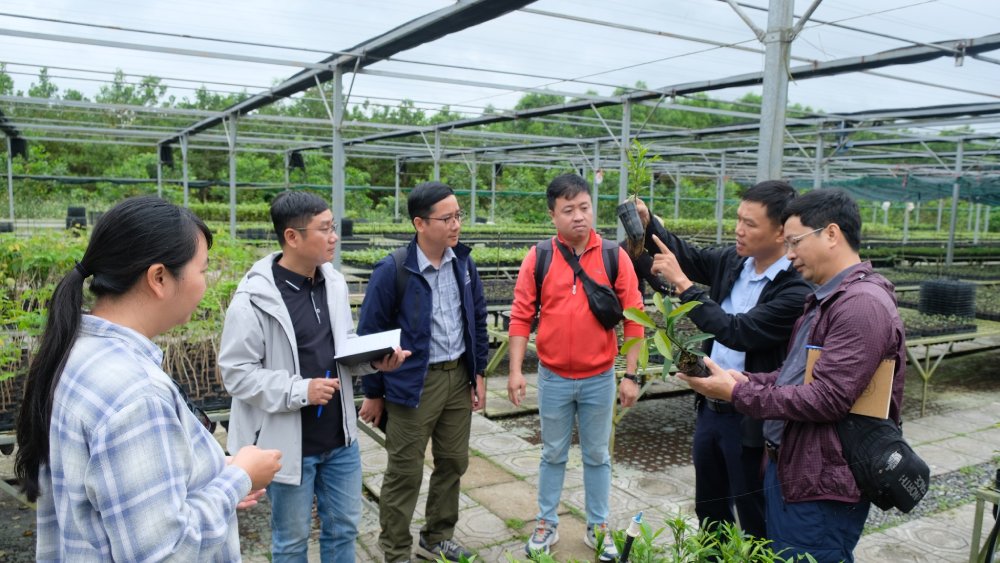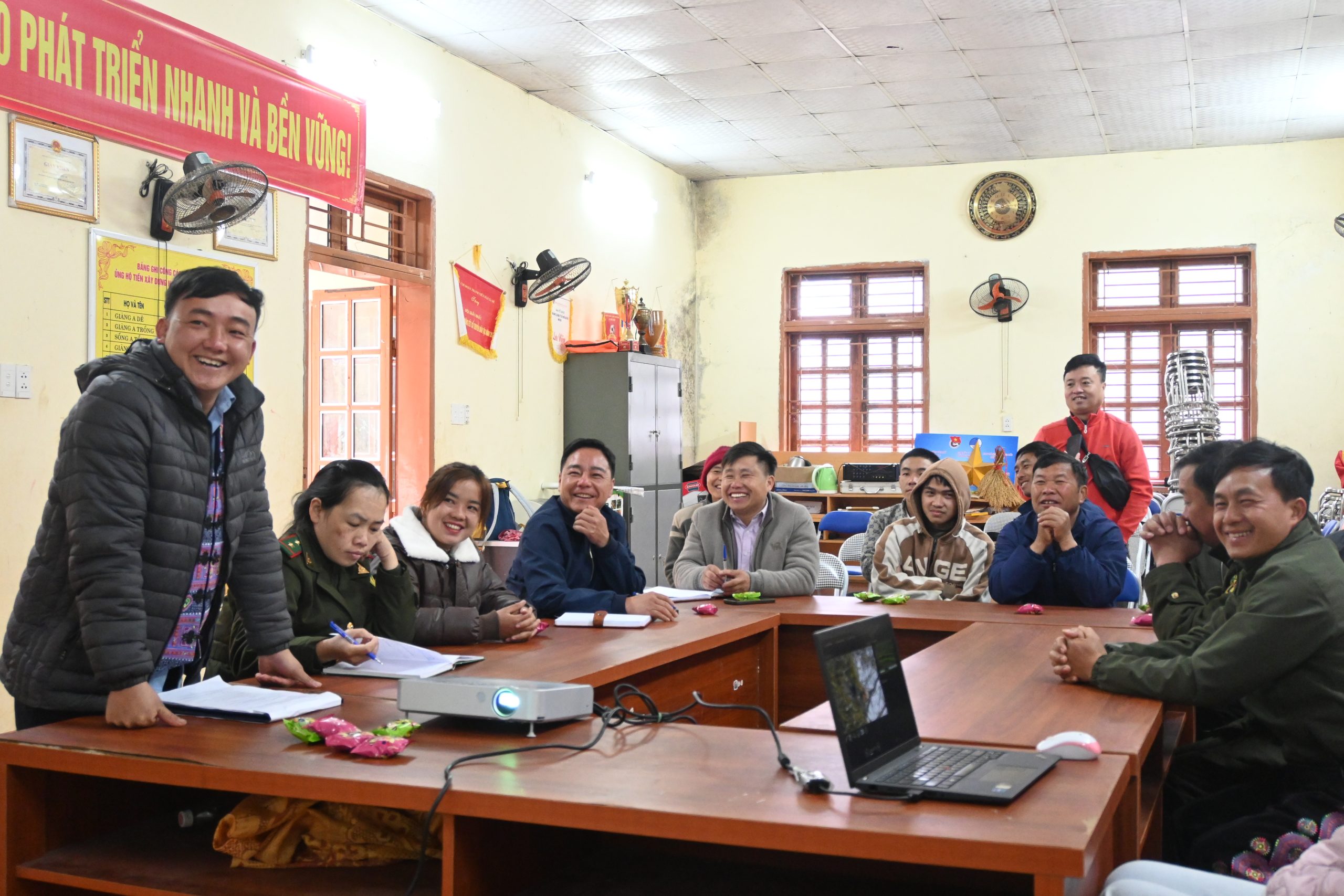
From March 17–20, 2026, within the framework of the Gia…
Advancing Co-Management of Rare Tree Species in Xuan Nha Forest
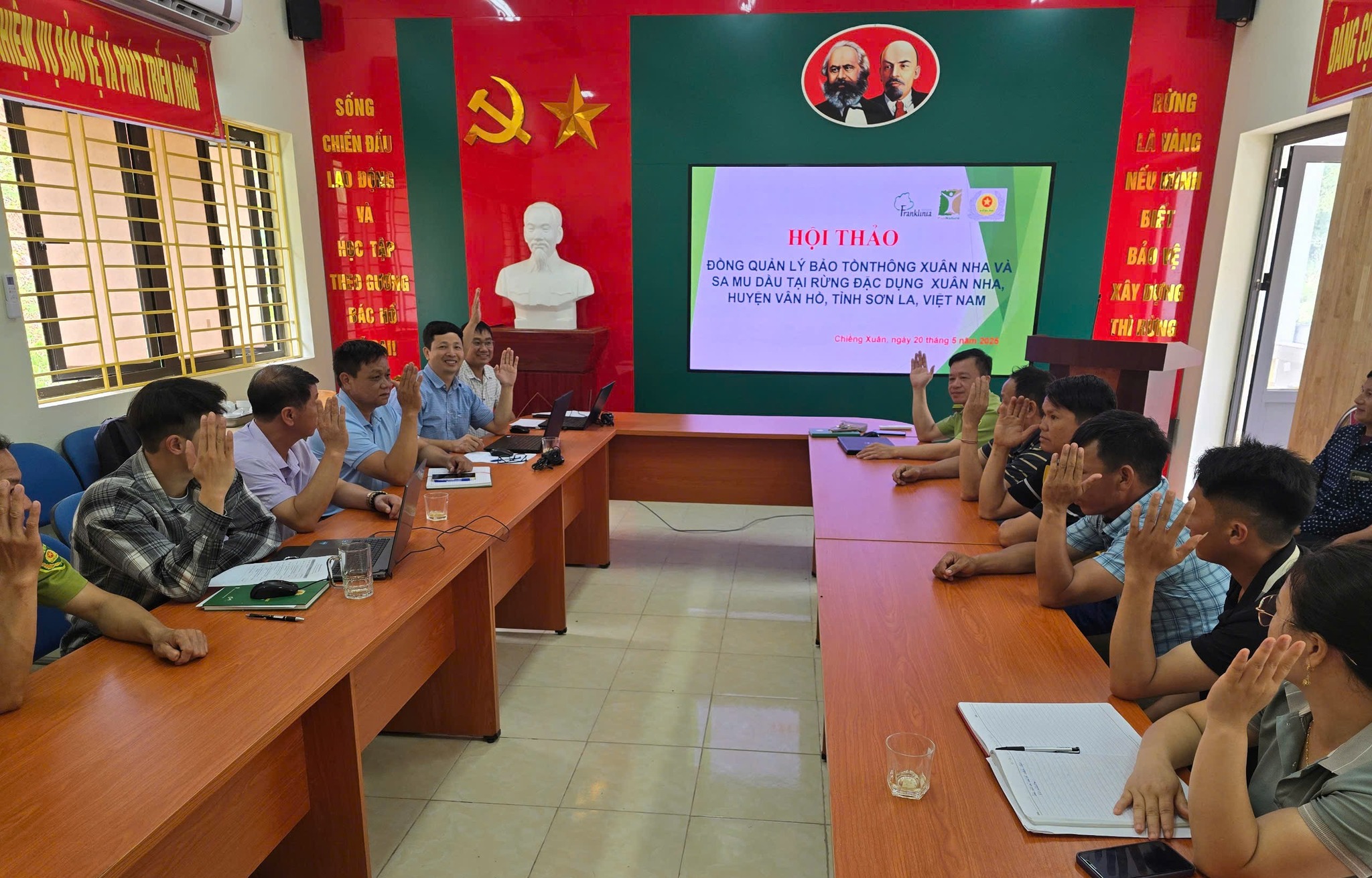
On May 20, 2025, the Board of Management of Xuan Nha Special-Use Forest, in collaboration with People and Nature Reconciliation (PanNature), organized a workshop titled “Co-Management for the Conservation of Xuan Nha Pine (Pinus dalatensis) and Taiwanese China fir (Cunninghamia konishii) in Van Ho District, Son La Province. The event brought together representatives from the Provincial Forest Protection Department, local authorities, civil society organizations, and buffer zone communities.
The workshop aimed to assess the current distribution, growth conditions, and threats facing two rare and valuable tree species – Xuan Nha Pine (Pinus dalatensis) and Taiwanese China fir (Cunninghamia konishii) – to discuss solutions to promote co-management mechanisms in species conservation efforts.
Through presentations by the Forest Management Board and findings from PanNature’s field surveys, participants noted that both species are facing increasing threats from illegal harvesting, exploitation for essential oil distillation and handicrafts, declining natural regeneration, and negative impacts of climate change.
Participants emphasized the crucial role of local communities in monitoring and protecting the habitats of these species. A co-management model—where communities actively participate in planning, patrolling, monitoring, and reporting forest-related risks—was proposed as an effective approach to both species conservation and community livelihood enhancement, while reinforcing local responsibility for natural resource management.
Based on the outcomes of the workshop, PanNature and the Xuan Nha Forest Board of Management will continue to collaborate on a pilot co-management model in selected forest compartments where Pinus dalatensis and Cunninghamia konishii are present. The model will include activities such as identifying priority conservation zones, raising awareness through outreach campaigns, and establishing community groups to engage in cyclical forest monitoring and management.
This workshop marks a significant step toward developing a scientific and practical foundation for community-based natural resource management models, especially in the context of increasing threats to Vietnam’s ecologically important species due to habitat degradation and climate change.
Some highlights from the workshop:


Related Posts